El Raval
Legal, Unregulated3/5ModerateDistrict guide to El Raval in Barcelona, covering the historic Barrio Chino, safety, nightlife venues, and practical tips for Barcelona's grittiest neighborhood.
Where to stay near El Raval
Hotels walking distance from the venues on this page.
See places to stay and current pricesPlaces to Drink and Dance
The places locals and visitors recommend
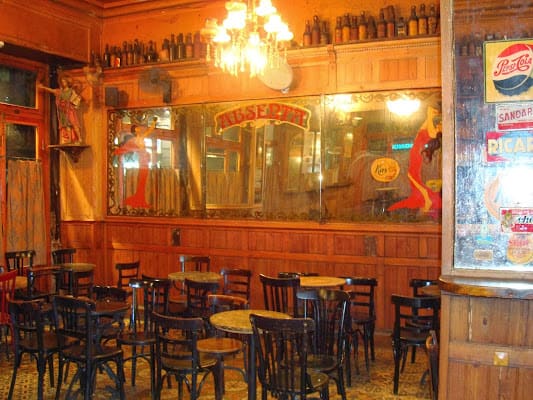
Bar Marsella
Operating since 1820, this is Barcelona's oldest bar and the city's most famous absinthe joint. Hemingway and Picasso drank here. The crumbling interiors haven't been updated in decades, and that's the point. Absinthe served the traditional way, with sugar and water.
Carrer de Sant Pau 65, 08001 Barcelona
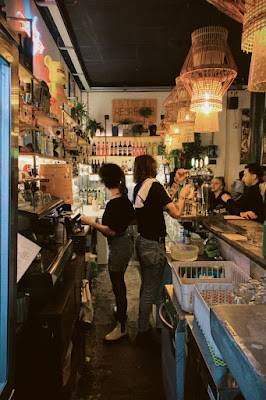
33|45
Vinyl bar and cocktail spot decorated with vinyl records and vintage audio equipment. Good cocktails at reasonable prices, a local crowd, and DJs spinning funk, soul, and disco on weekends. One of upper Raval's most reliably good bars.
Carrer de Joaquín Costa 4, 08001 Barcelona
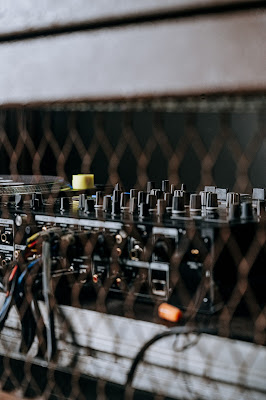
Moog
Small but legendary electronic music club near the bottom of La Rambla. Two floors: techno downstairs, indie and pop upstairs. Operating since 1996, Moog has hosted some of electronic music's biggest names in an intimate setting. Entry EUR 10-15.
Arc del Teatre 3, 08002 Barcelona
Betty Ford's
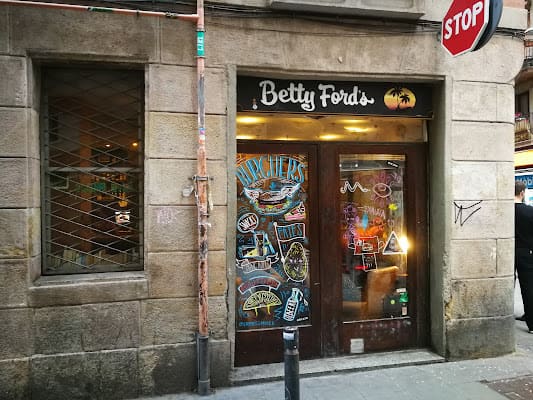
Dive bar on Carrer de Joaquin Costa with sticky floors, cheap drinks, and a crowd that doesn't care about appearances. Open late, unpretentious, and reliably packed on weekends. One of the last genuine dive bars in a rapidly gentrifying area.
Carrer de Joaquín Costa 56, 08001 Barcelona
Bar Pastís
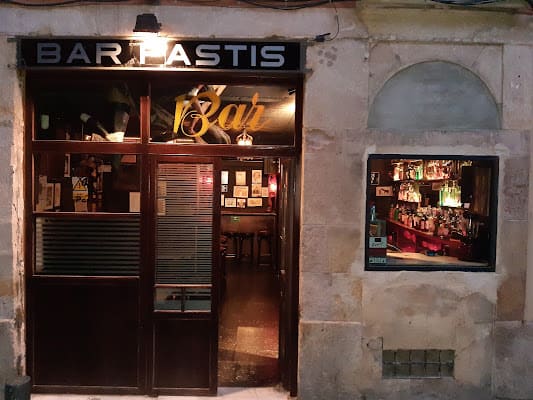
Tiny French-themed bar on Carrer de Santa Monica decorated with Edith Piaf memorabilia. Live music on some nights: chanson, flamenco, or jazz. The space holds maybe 40 people, creating an intimate atmosphere that larger venues can't replicate.
Carrer de Santa Mònica 4, 08001 Barcelona
Negroni Cocktail Bar
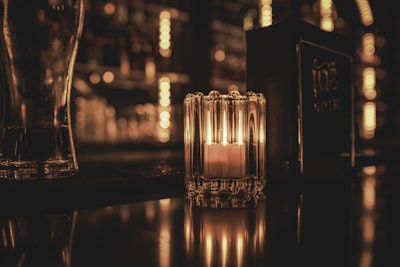
Dimly lit cocktail bar on Carrer de Joaquin Costa with a strong local following. The bartenders take their craft seriously and the drink menu changes seasonally. One of upper Raval's best spots for a quiet conversation over well-made drinks.
Carrer de Joaquín Costa 46, 08001 Barcelona
Bar Raval
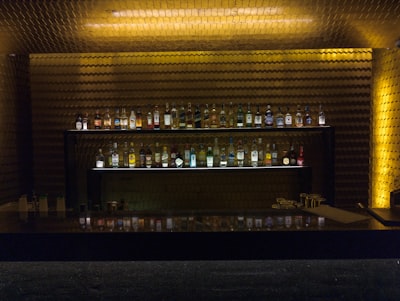
Curved, sculptural bar designed by architect Alfredo Arribas, wrapped in a mahogany shell that looks like the inside of a whale. Serves cocktails and coffee depending on the hour. The design alone is worth a visit.
Carrer del Doctor Dou 19, 08001 Barcelona
La Confiteria
Former 19th-century pastry shop converted into a cocktail bar, with the original display cases and ornate woodwork still intact. The gin and tonics are reliable, and the interior is one of the most photogenic bar spaces in Barcelona.
Carrer de Sant Pau 128, 08001 Barcelona
Garage Beer Co
Craft brewery and taproom tucked into a former garage space near MACBA. They brew on-site and rotate taps regularly. The crowd is young and international, drawn by the quality of the IPAs and pale ales.
Carrer del Consell de Cent 261, 08011 Barcelona
Marula Cafe
Intimate club near Placa Reial specializing in funk, soul, and Afrobeat. The dance floor is small but the energy is consistently high. Free entry on some weeknights, EUR 8-12 on weekends.
Carrer dels Escudellers 49, 08002 Barcelona
Robadors 23
Tiny live music venue on one of lower Raval's most notorious streets. Jazz, experimental, and flamenco fusion acts perform in a space barely bigger than a living room. The contrast between the raw street outside and the creative energy inside defines the Raval experience.
Carrer d'en Robador 23, 08001 Barcelona
Overview and Location
El Raval stretches from La Rambla westward to Avinguda del Paral.lel, and from Placa de Catalunya south to the port area. It's the largest neighborhood in Barcelona's old city (Ciutat Vella), and its character shifts dramatically depending on where you are.
Venue details verified through on-site research.
Upper Raval, north of Carrer de l'Hospital, has been gentrified over the past two decades. The MACBA (Museum of Contemporary Art) opened in 1995 and anchored a cultural transformation. The streets around Carrer de Joaquin Costa and Carrer dels Tallers now house craft cocktail bars, vintage record shops, design studios, and international restaurants. Skateboarders practice in the MACBA plaza during the day. At night, the bars fill with a mix of students, creative professionals, and tourists who've wandered beyond La Rambla.
Lower Raval, south of l'Hospital, retains more of the neighborhood's historic character. This was the Barrio Chino, a name coined by journalist Francisco Madrid in the 1920s. The nickname had nothing to do with China; it referenced the exotic, disreputable reputation of San Francisco's Chinatown and applied the same aura to Barcelona's equivalent. Through the 20th century, the Barrio Chino was a warren of brothels, cabarets, opium dens, and cheap boarding houses. Writers and artists gravitated to it: Jean Genet set parts of "The Thief's Journal" here; George Orwell passed through during the Civil War.
Today's lower Raval is no longer the Barrio Chino, but echoes persist. Some blocks have visible sex work, drug dealing, and a rougher street life than the tourist brochures acknowledge. Other blocks have excellent restaurants and bars. The contrast can be startling; you might walk from a Michelin-recommended restaurant to a street where transactions happen in doorways, all within two minutes.
Legal Status
Barcelona's 2012 Ordenanza de Convivencia introduced fines for offering or negotiating sexual services in public spaces. Fines range from EUR 100-300 for workers and EUR 1,000-3,000 for clients in designated zones. The ordinance was strengthened in 2022. Police patrol lower Raval specifically to enforce these provisions.
The practical effect has been to reduce but not eliminate visible street-based sex work. Workers are more cautious and less stationary. Much of the trade has migrated to pisos in the surrounding area, which operate through online advertising with minimal police interference. The dynamic is one of displacement rather than elimination.
Licensed bars and entertainment venues in El Raval operate under standard municipal permits. The neighborhood's gentrification has brought stricter enforcement of noise ordinances and licensing requirements, particularly in upper Raval where residential complaints have increased.
Costs and Pricing
El Raval offers better value than most of Barcelona's tourist-facing neighborhoods.
Drinks at bars. Beer costs EUR 2.50-4 at standard bars. Cocktails run EUR 8-12 at upper Raval's craft bars. Absinthe at Bar Marsella is EUR 6-8, served the traditional way. Betty Ford's and similar dive bars keep beer at EUR 3-4.
Club entry. Moog charges EUR 10-15. Smaller venues on Raval streets often have no cover, making their money on drink sales.
Food. El Raval has some of Barcelona's best-value dining. Kebab and falafel shops cluster along lower Raval streets for EUR 4-6. Pakistani restaurants on Carrer de Sant Pau serve generous plates for EUR 6-9. The upper Raval has newer restaurants where tapas run EUR 5-10 and mains cost EUR 12-18.
Adult services. Street-level services in lower Raval (where they persist) start at EUR 20-40. Pisos in the neighborhood range from EUR 50-120 per session. The pricing reflects lower overhead and a less affluent clientele than Madrid's Calle Montera area.
Street-Level Detail
Carrer de Joaquin Costa. Upper Raval's main bar street. Small venues line both sides, and the crowd is a mix of Barcelona's creative scene and international residents. 33|45 anchors the strip. Other bars rotate in and out as the neighborhood evolves. The street is well-lit and busy until late, making it safe and social.
MACBA plaza. The open square in front of the contemporary art museum is a daytime gathering point for skateboarders, backpackers, and students. The bars ringing the plaza open their terraces from afternoon onward. It's a natural meeting point and one of the few open spaces in the old city.
Carrer de l'Hospital. The dividing line between upper and lower Raval, literally and figuratively. The 15th-century Hospital de la Santa Creu (now a library and cultural center) occupies a full block. South of this line, the neighborhood's character shifts. Streets narrow, lighting dims, and the commercial mix changes from cocktail bars to ethnic grocery shops and late-night establishments.
Carrer de Sant Pau / Carrer Nou de la Rambla. These parallel streets in lower Raval have a mix of Pakistani restaurants, vintage shops, and a few remaining adult entertainment venues. The southern end near the port is where the old Barrio Chino was most concentrated. Palau Guell (one of Gaudi's early works) stands on Carrer Nou de la Rambla, a jarring reminder of the neighborhood's architectural heritage amid its grittier street life.
Carrer d'en Robador. Perhaps lower Raval's most notorious street. Drug dealing and sex work are visible here. The Filmoteca de Catalunya (Catalonia's film archive) opened on this street in 2012 as part of an urban renewal strategy. The juxtaposition is stark: an architecturally modern cultural institution on a block where the street dynamics haven't fully changed.
Safety
El Raval requires more awareness than Barcelona's other nightlife neighborhoods. The difference between upper and lower Raval is significant enough that they're almost different neighborhoods from a safety perspective.
Upper Raval (north of l'Hospital):
- Generally safe at all hours
- Bar areas on Joaquin Costa and around MACBA are well-trafficked and well-lit
- Standard pickpocketing risk applies, especially near La Rambla's western edge
Lower Raval (south of l'Hospital):
- Safe during daytime and early evening on main streets
- After midnight, some blocks become sketchy. Carrer d'en Robador, parts of Carrer de Sant Pau, and narrow connecting alleys can feel uncomfortable
- Drug dealing is visible on some corners. Dealers occasionally approach passersby. A firm "no" is sufficient; they're not aggressive
- Muggings occur on darker side streets, particularly targeting visibly intoxicated people. Walk in groups when possible, and stick to well-lit streets
- Women walking alone through lower Raval after midnight report higher rates of street harassment than in other Barcelona neighborhoods
General Raval safety:
- Pickpocketing is a constant. The usual techniques apply: distraction, bumping, fake petitions
- Don't flash phones or cameras unnecessarily
- Emergency number 112. Hospital del Mar is the nearest major facility (15 minutes by taxi)
Cultural Context
El Raval's identity is built on layers of history that coexist uneasily. The neighborhood is simultaneously one of Barcelona's most culturally rich areas (MACBA, CCCB cultural center, Filmoteca, Palau Guell) and one of its most socially complex. Waves of immigration have made it the most diverse neighborhood in the city; on a single block you'll hear Urdu, Arabic, Tagalog, Bengali, Spanish, and Catalan.
The gentrification of upper Raval has been controversial. Rising rents have displaced long-term residents and the small businesses that served them. The same process that brought cocktail bars and design studios pushed out the working-class community that defined the neighborhood for decades. Some blocks feel like a pitched battle between old Raval (cheap hotels, ethnic shops, street life) and new Raval (boutique stores, craft coffee, co-working spaces).
For visitors, this tension creates a neighborhood with more texture and authenticity than the polished tourist zones of the Born or Eixample. El Raval is messy, contradictory, and real in ways that tourist Barcelona often isn't. Just understand what you're walking into.
Scam Warnings
Distraction robbery. Common in lower Raval after midnight. One person approaches asking for directions or a light. While you're engaged, a partner approaches from behind and lifts your wallet or phone. If strangers approach you on quiet lower Raval streets late at night, keep walking and stay aware of your surroundings.
Fake drug deals. Dealers sometimes sell oregano, flour, or other substances as cannabis or cocaine. Beyond the obvious problems with buying drugs from strangers, some fake deals are setups for robbery. Don't engage.
Bar overcharging. A few lower Raval bars inflate bills for tourists. Pay attention to posted prices and check your bill. If prices aren't displayed, ask before ordering.
Nearby Areas
La Rambla. Barcelona's main tourist boulevard forms El Raval's eastern boundary. See the La Rambla district guide.
Poble Sec. South of Avinguda del Paral.lel, this neighborhood has Carrer Blai's pintxos strip and Sala Apolo. See the Poble Sec district guide.
Gothic Quarter (Barri Gotic). Across La Rambla to the east. Medieval streets, tourist bars, and the Cathedral. More tourist-oriented than El Raval but safe and well-trafficked.
Meeting People in El Raval
Upper Raval's bars on Joaquin Costa are among Barcelona's best for socializing. The spaces are small, the crowds are mixed, and the atmosphere encourages conversation. MACBA's plaza functions as an informal social space during warmer months. The neighborhood's cultural venues (CCCB hosts exhibitions, film screenings, and talks) draw an engaged, interesting crowd.
For meeting locals specifically, the smaller bars off the main strips are better than the ones directly on Joaquin Costa. Places that don't appear in guidebooks attract people who live in the neighborhood rather than people visiting it. For a broader perspective on Barcelona's social and dating scene, see the Barcelona city guide.
Best Times
- Thursday through Saturday, 10 PM to 3 AM for bar nightlife in upper Raval
- Moog peaks between 1 AM and 5 AM on weekends
- Summer evenings bring the terrace culture to life. MACBA plaza is a gathering point from 7 PM onward
- Daytime upper Raval is pleasant for exploring: galleries, record shops, and coffee shops are open from 10 AM
- Lower Raval is best visited during daylight hours or early evening for its restaurants. Late-night visits require more awareness
- Sunday and Monday are quieter across the neighborhood
What Not to Do
- Do not wander lower Raval's side streets alone after midnight unless you're familiar with the area
- Do not buy drugs from street dealers. The product is likely fake, and the interaction may be a robbery setup
- Do not photograph people without consent, particularly workers or drug dealers. Both take this very seriously
- Do not leave bags on the floor at bars. Loop straps around your leg or chair leg
- Do not assume El Raval is uniformly dangerous. Upper Raval around MACBA is safe, lively, and full of excellent bars. The neighborhood's reputation is outdated by at least a decade for the northern half
- Do not ignore Palau Guell if you have any interest in architecture. It's one of Gaudi's finest works, and it costs EUR 12 to visit
Get the Legal Status PDF, 50 countries
Newsletter signup coming soon. Check back shortly.
Frequently Asked Questions
Related Guides
Barcelona Overview
City guide to adult nightlife in Barcelona, covering El Raval, safety, tourist scams, and the cultural context of Spain's most-visited city.
Read guideLa Rambla
District guide to La Rambla in Barcelona, covering the famous boulevard, safety, pickpocketing risks, and practical tips for navigating Barcelona's most visited street.
Read guidePoble Sec
District guide to Poble Sec in Barcelona, covering Carrer Blai's pintxos bars, Sala Apolo, and practical tips for Barcelona's best local nightlife neighborhood.
Read guideWas this guide helpful?