De Wallen
Legal & Regulated4/5SafeDistrict guide to De Wallen (Red Light District) in Amsterdam, covering window prostitution, street layout, safety, and visitor etiquette.

Where to stay near De Wallen
Hotels walking distance from the venues on this page.
See places to stay and current pricesNightlife Picks
Bars, clubs, and lounges in the area
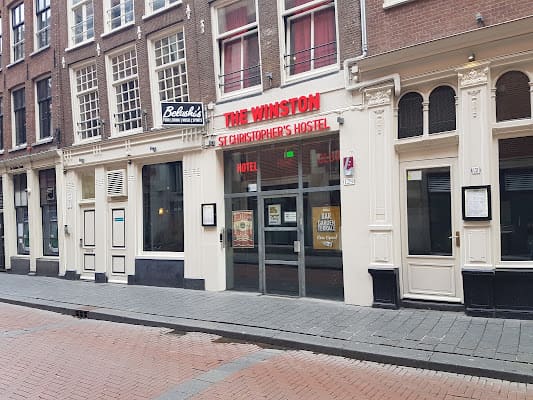
Winston Kingdom
Compact underground venue on Warmoesstraat hosting live bands, DJ nights, and genre-spanning club events. The programming leans experimental, drawing a mixed local and international crowd.
Warmoesstraat 131
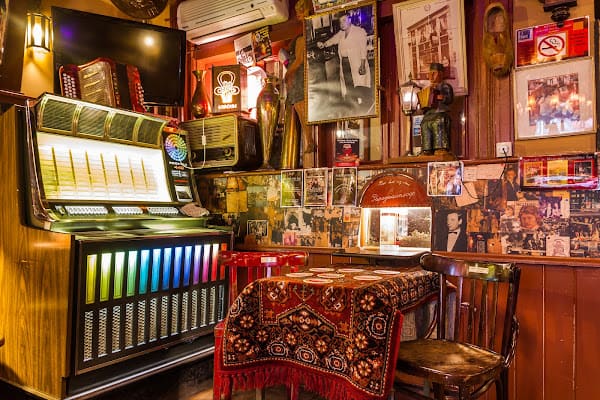
Café 't Mandje
One of Amsterdam's oldest bars, opened in 1927 on Zeedijk and recognized as a pioneering LGBTQ+ establishment. The interior is covered floor to ceiling with memorabilia left by decades of regulars.
Zeedijk 63
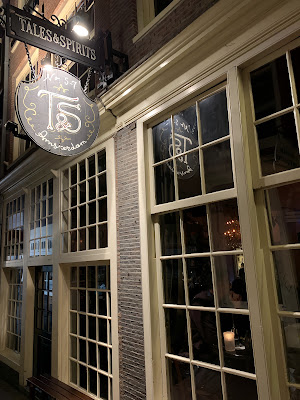
Tales & Spirits
Dimly lit cocktail bar tucked into a narrow alley off Warmoesstraat. The bartenders focus on classic and original cocktails with house-made ingredients.
Lijnbaansteeg 5-7
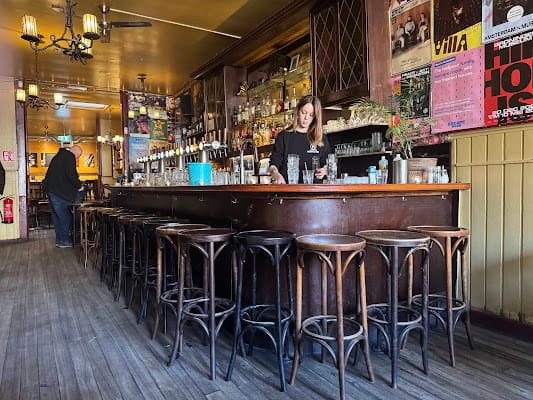
Café de Engelbewaarder
Relaxed brown café along the Kloveniersburgwal canal known for its long-running Sunday afternoon jazz sessions. The rest of the week it operates as a quiet neighborhood bar with a literary crowd.
Kloveniersburgwal 59
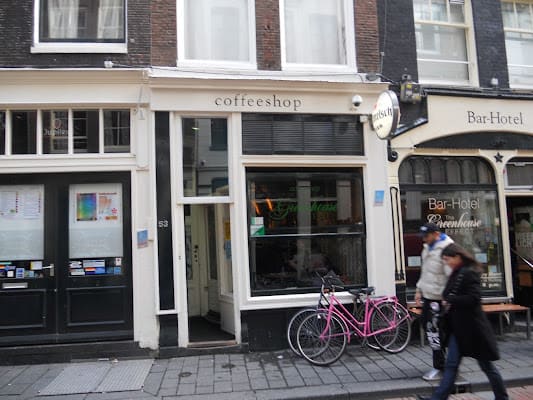
Greenhouse Effect
Multi-level bar and lounge on Warmoesstraat popular with tourists exploring the district. The upper floors offer cocktails and a more laid-back atmosphere than the busy street level.
Warmoesstraat 53
Overview and Location
De Wallen, colloquially known as the Red Light District, is Amsterdam's oldest neighborhood and the most recognizable adult entertainment district in the world. Located in the heart of the city center, it occupies a compact area of medieval streets and canals roughly bounded by Centraal Station to the north, Nieuwmarkt to the east, Dam Square to the west, and the Kloveniersburgwal canal to the south.
Venue details verified through on-site research.
The district takes its name from the old city walls (wallen) and its characteristic feature is the series of window units, glass-fronted rooms illuminated by red neon, where licensed sex workers are visible to passersby along the narrow canal-side streets.
De Wallen is simultaneously one of Amsterdam's most historic neighborhoods (the Oude Kerk, Amsterdam's oldest building, stands at its center) and its most famous tourist attraction, drawing millions of curious visitors each year.
Legal Status
De Wallen operates under the most regulated and transparent adult entertainment framework in the world. Window prostitution was formally legalized with the lifting of the brothel ban in 2000, though it had been tolerated for centuries.
Key regulatory elements:
- Licensing: Workers must obtain a license from the city. They must be at least 21 years old and EU citizens or legal residents
- Registration: Workers must register with the municipality and undergo regular health consultations
- Window rental: Window spaces are rented from building operators who hold separate licenses
- Inspections: Municipal authorities conduct regular inspections of both working conditions and building safety
- Health services: The GGD (municipal health service) provides free sexual health testing and counseling
The City of Amsterdam has reduced the number of available window spaces over the past two decades, from approximately 480 to around 330, through a program called Project 1012. This remains politically contentious, with worker advocacy groups arguing it reduces safe, regulated working environments.
Costs and Pricing
Window services in De Wallen follow relatively standardized pricing. A standard session of 15-20 minutes typically costs EUR 50-100, with most workers quoting EUR 100 as the starting rate. Prices have crept upward in recent years as window rents have increased.
Drinks in the area run higher than the Amsterdam average due to tourist traffic. A half-liter beer at a canal-side bar costs EUR 5-8, cocktails EUR 8-12, and a glass of house wine EUR 4-6. Some bars off the main streets offer small draft beers for EUR 2-3.
Coffee shops near De Wallen charge EUR 10-13 per gram for cannabis flower, EUR 5-8 for pre-rolled joints, and EUR 5-7 for space cakes. Public cannabis smoking is banned in De Wallen, Dam Square, and Nieuwmarkt. Fines are EUR 100.
Nearby attractions have reasonable entry fees. The Red Light Secrets museum costs EUR 14.50, the Erotic Museum EUR 8-10, and the Sexmuseum on Damrak EUR 5. Standard canal tours run EUR 15-22 per person for a one-hour cruise.
For dining, an eetcafe lunch runs EUR 12-15, a casual dinner EUR 20-30 per person, and a nicer restaurant EUR 40-60. Fast food is around EUR 10-12.
Public transport within Amsterdam costs EUR 3.40 for a single tram/bus/metro ride or EUR 10 for a 24-hour pass. Contactless bank cards work directly on the OV-pay system without needing a separate card.
Accommodation near De Wallen starts at EUR 30-60 for a hostel dorm bed. Budget hotels run EUR 80-100 per night, mid-range hotels EUR 150-200, and the luxury options near Centraal Station EUR 250-400+. Summer and holiday periods can double these rates.
Street-Level Detail
Oudezijds Achterburgwal. The main canal street running through the heart of De Wallen. The longest continuous stretch of window units is found here. The canal provides a natural walkway with windows on both sides.
Oudezijds Voorburgwal. A parallel canal street with additional window units. The Oude Kerk (Old Church) occupies a prominent position between the two canals.
Trompettersteeg. One of Amsterdam's narrowest alleys, connecting the two main canals. This short passage contains window units on both sides and is one of the most photographed (from the outside) locations in the district.
Moudesteeg and Bethlemsteeg. Short connecting streets with additional windows.
Goldbergersteeg. A quiet alley connecting to the Zeedijk area.
Sint Annendwarsstraat / Sint Annenstraat. Streets connecting De Wallen to the Nieuwmarkt area, with some window units and various shops and restaurants.
The overall area is compact; the entire circuit can be walked in 15-20 minutes at a leisurely pace. The streets are narrow, cobblestoned, and can become extremely crowded on weekend evenings.
Enforcement
De Wallen has one of the highest police-to-civilian ratios of any neighborhood in the Netherlands:
- Uniformed and plainclothes officers patrol continuously
- CCTV cameras cover all major streets and alleys
- Every window unit is equipped with an emergency button connected to police dispatch
- Municipal enforcement officers address public order issues
- The PIC (Prostitution Information Centre), run by former sex workers, provides information and advocacy
Enforcement focuses on:
- Photography prohibition: actively enforced; workers may confront photographers
- Public order: noise, obstruction, urination, drug use
- Unlicensed operators
- Trafficking indicators
- Pickpocketing
Safety
De Wallen is, paradoxically, one of the safest neighborhoods in Amsterdam due to the level of policing and surveillance:
- Violent crime is rare
- Pickpocketing is the primary risk; narrow, crowded streets are ideal for thieves
- Keep wallets in front pockets; do not use phone while walking in dense crowds
- Watch for bicycle traffic at the edges of pedestrian areas
- Canal edges have no railings, and intoxicated visitors fall in every year
- Drug dealers operate at the margins of the district. Avoid engagement
Cultural Norms and Etiquette
De Wallen has strict behavioral expectations that are both legally and socially enforced:
- No photography or filming of workers. This is the single most important rule. Workers will react, sometimes aggressively, to cameras pointed at them. Enforcement officers issue fines. Even taking a selfie with windows in the background is problematic
- Do not block doorways or windows. Workers need clear access to their doors. Standing in front of a window gawking impedes business
- Move through at a reasonable pace. The narrow streets cannot accommodate stationary groups
- Keep noise reasonable. Residents live in the upper floors of the buildings
- Do not knock on windows unless you intend to inquire about services
- Respect workers' decisions. If a worker declines a client, that decision is final
- Do not haggle. Pricing is generally standardized; attempting to negotiate lower is disrespectful
Scam Warnings
De Wallen itself has relatively few scams, as the regulated environment provides transparency. Risks are more general:
- Pickpocketing is the number one issue. Groups of thieves target distracted visitors in the narrow streets
- Street drug dealers selling fake or dangerous substances. Avoid entirely
- Overpriced drinks at tourist-trap bars along the canal streets. Check menus before ordering
- Unlicensed "guides" offering tours for tips, who may direct you to affiliated businesses
- Confusion about pricing: the standard window visit has a set price and duration. Confirm these at the door before entering
Nearby Areas
Zeedijk. A street running from Centraal Station to Nieuwmarkt that forms the boundary of De Wallen. Features Amsterdam's small Chinatown, excellent restaurants, and a mix of bars.
Nieuwmarkt. A large square at the eastern edge of De Wallen with cafes, restaurants, and the historic Waag (weighing house). A pleasant area for a meal before or after visiting the district.
Dam Square. Amsterdam's central square, a 5-minute walk west. The Royal Palace and the National Monument are here.
Warmoesstraat. Parallel to the Oudezijds Voorburgwal, this is one of Amsterdam's oldest shopping streets and has a concentration of LGBTQ+ bars and coffee shops.
Meeting People Nearby
Nieuwmarkt square has conventional cafes and restaurants that are well suited for casual socializing away from the tourist intensity of De Wallen itself. Zeedijk street offers a diverse selection of bars alongside Amsterdam's small Chinatown, with a more relaxed atmosphere than the district's core streets. Warmoesstraat has a mix of LGBTQ+ bars and coffee shops with social atmospheres where conversation comes naturally. For the full Amsterdam social scene beyond the tourist center, see the Amsterdam city page.
Best Times
- Weekday evenings (8 PM - midnight): Less crowded, easier to navigate. Workers are more available
- Weekend evenings (10 PM - 2 AM): Very crowded, party atmosphere. Can feel overwhelming
- Afternoon: Some windows are active, but most activity begins in the evening
- Summer: Maximum activity and maximum crowds. Longest operating hours
- Winter: Fewer tourists, more locals. Earlier closing times. A different, quieter experience
What Not to Do
- Do not photograph or film workers under any circumstances
- Do not stand in front of windows staring. Either engage or move on
- Do not block the narrow passages by standing in groups
- Do not buy drugs from street dealers
- Do not consume excessive amounts of alcohol or cannabis before visiting
- Do not attempt to negotiate prices below the standard rate
- Do not touch workers without invitation
- Do not visit with a large group expecting a party atmosphere. It is a place of business
- Do not fall into the canal. Watch your step along unprotected edges
Get the Legal Status PDF, 50 countries
Newsletter signup coming soon. Check back shortly.
Related Guides
Amsterdam Overview
City guide to adult nightlife in Amsterdam, covering De Wallen, safety, cultural norms, and practical advice.
Read guideRuysdaelkade
District guide to the Ruysdaelkade window district in Amsterdam's De Pijp neighborhood, the city's smallest and quietest red-light area.
Read guideSingelgebied
District guide to Singelgebied in Amsterdam, a quieter window prostitution area near the Singel canal with practical tips.
Read guideFrequently Asked Questions
Was this guide helpful?