
Entertainment Districts
Pick a neighborhood to start exploring
Namba
4/5SafeDistrict guide to Namba in Osaka. Dotonbori, Ura-Namba, Soemoncho hostess bars, nightclubs, and practical safety advice for Osaka's main nightlife hub.
11 nightlife spots listed
Tobita Shinchi
4/5SafeDistrict guide to Tobita Shinchi in Osaka, one of Japan's last historic licensed quarters with practical advice and cultural context.
10 nightlife spots listed
Shinsekai
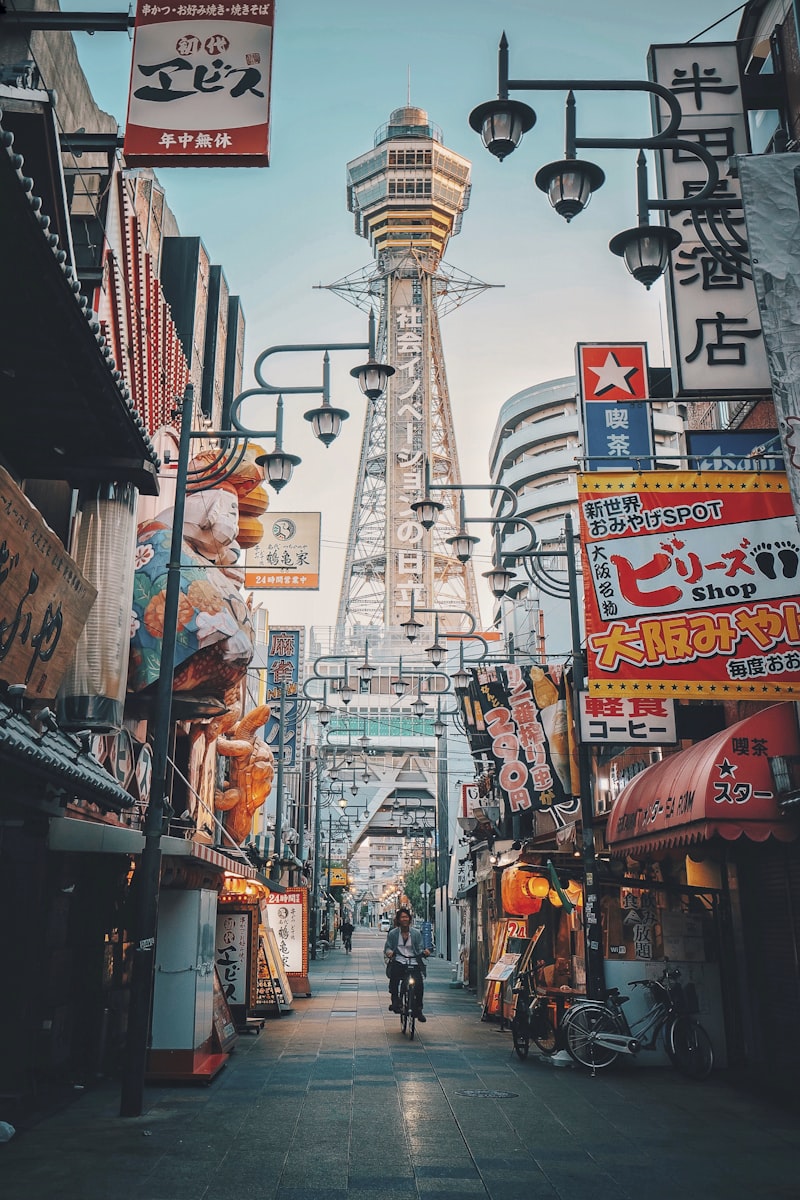
3/5ModerateDistrict guide to Shinsekai in Osaka. A retro entertainment district with kushikatsu, cheap bars, Tsutenkaku Tower, and adult venues on its edges.
10 nightlife spots listed
District Map of Osaka
Pick a district to recenter the map and see hotels nearby.
Where to stay in Osaka
Compare hotels and rentals across the city's nightlife districts.
See places to stay and current pricesOverview
Osaka is Japan's third-largest city and its culinary and entertainment capital. Where Tokyo is polished and reserved, Osaka is loud, funny, and proud of it. Osakans have a reputation for being the most outgoing people in Japan, and the city's nightlife reflects that energy. It's the home of Japanese comedy, street food culture, and a more relaxed attitude toward having a good time.
Our team walked every district covered here.
The city's adult entertainment scene is significant but operates within Japan's particular legal and cultural framework. Japan draws extremely specific legal lines between what's permitted and what isn't, creating a situation that can be confusing for foreign visitors. Services that stop short of a particular legal definition operate openly in licensed zones, while crossing that line remains technically illegal.
For foreign visitors, the biggest challenge isn't safety or legality. It's access. Many establishments in Osaka don't accept non-Japanese customers, and the language barrier is real. Unlike Tokyo's Kabukicho, which has adapted somewhat to international tourism, Osaka's entertainment districts are oriented primarily toward a domestic Japanese clientele.
Legal Context
Japan's Anti-Prostitution Law (1956) specifically prohibits the exchange of money for vaginal intercourse. This narrow definition means that a vast range of other adult services operate legally within the fuzukei eigyo (adult entertainment business) regulatory framework. Establishments are licensed, regulated, and taxed.
Osaka's entertainment businesses must hold appropriate permits from the local Public Safety Commission. Different license categories cover different types of establishments, from hostess bars to various adult service providers. Operating without proper licenses or outside designated zones is illegal.
The practical effect is a large, licensed industry that operates openly within very specific boundaries. Foreign visitors should understand that these boundaries are real and enforced, even if the distinction seems arbitrary from an outside perspective.
Key Areas
Tobita Shinchi. A small grid of narrow streets in Nishinari ward, near Shinsekai. This is one of Japan's last remaining historic licensed quarters, operating continuously since 1918. The streets are lined with small traditional-style establishments where women sit in lit doorways while an older woman (the "okami") negotiates with passing men. It's a unique cultural holdover that operates by strict unwritten rules: no photography, no negotiating, no lingering. Visits are short and transactional. The area is very small. You can walk the entire district in five minutes.
Shinsekai. An older entertainment district surrounding Tsutenkaku Tower in southern Osaka. Originally built as a flashy entertainment zone in 1912, it declined for decades before becoming a popular tourist destination for its retro atmosphere and street food (kushikatsu is the signature dish). The area has some adult entertainment, particularly on its southern edges near Tobita Shinchi, but it's primarily a food and drinking destination. It can feel rough around the edges compared to Namba or Umeda.
Namba area. Osaka's primary entertainment hub, encompassing Dotonbori, Shinsaibashi, and the surrounding streets. This is where you'll find the highest concentration of nightlife: izakayas, bars, clubs, karaoke, and some adult entertainment venues. Parts of the Namba area, particularly around the Misono Building (Ura-Namba), have hostess bars and adult-oriented establishments that are more open to foreign visitors than other areas.
Safety
Osaka is extraordinarily safe by any measure:
- Violent crime against tourists is virtually nonexistent. Japan's crime rates are among the lowest in the developed world
- You can walk anywhere in Osaka at any hour without significant personal safety concerns
- The biggest practical risk is overcharging at certain nightlife venues, particularly hostess bars and "snack" bars that don't display clear pricing
- Lost property is typically returned in Japan. If you leave something in a taxi or train, contact the operator and you'll likely get it back
- Drink spiking is extremely rare but not impossible. Standard precautions apply
- Emergency number is 110 for police, 119 for ambulance/fire
- Osaka has excellent hospitals, though English-speaking staff may be limited. Travel insurance is recommended
Cultural Norms
Japanese entertainment culture has rules that aren't always obvious to foreigners:
- Many venues have a "Japanese only" policy. This isn't always about racism. It's often about language requirements and maintaining the atmosphere for regular customers. Don't take it personally, and don't argue. Move on to a venue that welcomes foreigners
- Shoes off at the entrance of many establishments. Look for a shoe rack or follow what others do
- Tipping is not practiced in Japan. It can cause confusion and even be seen as insulting. Pay the stated price
- Bowing is the standard greeting. A slight bow is sufficient for most casual interactions
- Speaking loudly or being boisterous is tolerated more in Osaka than in Tokyo, but you still shouldn't be the loudest person in the room
- Tobita Shinchi has an absolute prohibition on photography. Do not take photos or video under any circumstances. Your phone should stay in your pocket
- Don't touch people without invitation. Personal space norms in Japan are different from Western countries
Social Scene
Osaka's reputation as Japan's friendliest city isn't just marketing. Osakans are genuinely more outgoing, more humorous, and more willing to talk to strangers than people in most other Japanese cities. This makes organic socializing easier here than almost anywhere else in the country.
The Dotonbori strip and its surrounding streets in Namba are the most tourist-accessible nightlife area. Bars along the canal and in the side streets attract a mixed crowd of locals and visitors. Americamura (America Village) near Shinsaibashi draws a younger, fashion-conscious crowd in their twenties, with small bars, live music venues, and street culture. The Namba area izakayas are good for casual drinking with locals, especially the ones tucked under railway tracks or in basement floors. Shinsekai's retro standing bars (tachinomi) serve cheap drinks in a working-class atmosphere that encourages conversation.
Daytime socializing options are fewer and less structured than in Tokyo. Osaka has fewer formal language exchange events, though they do exist at cafes around Umeda and Namba. The coworking scene is growing, with spaces like The Deck and WeWork Namba hosting occasional networking events. International meetups happen but on a smaller scale than Tokyo's massive groups.
The expat community in Osaka is smaller than Tokyo's but tightly connected. Osaka International House runs cultural events and language programs that attract both Japanese and foreign residents. Kansai Scene, a long-running English-language magazine and website, maintains an active community calendar. Meetup.com has several active Osaka groups, though events are less frequent than in the capital. Sports leagues, hiking groups for the surrounding Kansai mountains, and volunteer organizations provide regular social contact.
Local Dating Notes
Osaka's dating culture is slightly more relaxed than Tokyo's. Osakans are known for directness, which extends to romantic interactions. People here tend to say what they mean more often, reducing the guesswork that can frustrate foreigners dating in Tokyo. The warikan (splitting the bill) custom is more accepted among Osaka's younger generation. Language remains the primary barrier for foreign men, but Osaka's friendlier social atmosphere means initial conversations happen more naturally. See the Japan country page for details on dating apps and cultural norms.
Scam Warnings
Osaka has far fewer nightlife scams than most international cities, but some patterns exist:
Hostess bar overcharging: Some hostess or "snack" bars near Namba don't display prices. You'll be welcomed warmly, sit down, have drinks poured, and then receive a bill for tens of thousands of yen. Always ask for a price list or clarify costs before ordering. If a place doesn't have visible pricing and staff can't explain costs clearly, leave.
Street touts in Namba: Men standing outside bars on the streets around Dotonbori may aggressively try to pull you into venues. These touts (called "catch" in Japanese) are often associated with overpriced establishments. Ignore them and walk past.
Fake "free" bars: Some venues advertise no cover charge but have mandatory high-priced drink orders or time-based charges. Confirm the total cost structure before sitting down.
Best Times
Osaka's nightlife peaks on Friday and Saturday nights. The Namba area stays active until 4:00-5:00 AM on weekends.
Spring (March-April) during cherry blossom season is beautiful and the city is energetic. Autumn (October-November) is similarly pleasant. Summer (July-August) is hot and humid, which can make walking between venues uncomfortable. Winter is mild by Japanese standards.
Tobita Shinchi operates from late afternoon until around 11:00 PM. It doesn't follow the late-night schedule of Namba's bars and clubs.
Major festivals like Tenjin Matsuri (July) and the Ebisubashi area New Year celebrations bring enormous crowds and peak nightlife activity.
Getting Around
- Osaka Metro: Extensive subway system covering all major areas. Key stations include Namba, Shinsaibashi, Dobutsuen-mae (for Shinsekai/Tobita), and Umeda. Runs until about midnight
- JR lines: Complement the metro, particularly useful for reaching Shin-Osaka and connecting to other cities
- Taxis: Clean, safe, and metered. Doors open and close automatically. Available on the street or at stands. Prices are higher than in Southeast Asia but reasonable by Japanese standards
- Walking: Namba, Dotonbori, and Shinsaibashi are all walkable from each other. Shinsekai is about a 15-minute walk south of Namba
- Ride-hailing: Japan Taxi app works in Osaka. Uber has limited availability compared to other countries
What Not to Do
- Do not take photographs in or around Tobita Shinchi under any circumstances
- Do not argue with a "Japanese only" policy. It's their right and getting angry won't change anything
- Do not tip. It's not part of Japanese culture
- Do not eat or drink while walking on the street. It's considered poor manners in Japan
- Do not be the loudest person in any venue
- Do not ignore pricing concerns. If a venue can't clearly state what things cost, don't sit down
- Do not assume that being in Japan means you can let your guard down about drink safety entirely. It's very safe, but basic awareness is always smart
- Do not jaywalk. Japanese people follow pedestrian signals, and you should too
- Do not blow your nose in public. Step into a restroom if you need to
Get the Legal Status PDF, 50 countries
Newsletter signup coming soon. Check back shortly.
Bookable nightlife experiences in Osaka
Curated tours and shows from verified operators. Skip-the-line entry, bilingual guides, and fixed prices booked online.
Flights to Osaka
Compare prices across airlines. Filter by stops, time, and cabin.
Airport transfer to Osaka
Pre-booked transfers cost about the same as a metered taxi but cut out the airport queue, the meter argument, and the "no English" routine that takes some drivers to the wrong address. Fixed price quoted before booking, driver tracks your flight, waits with a name sign at arrivals.
Book a KiwiTaxi transferFrequently Asked Questions
Related Guides
Namba
District guide to Namba in Osaka. Dotonbori, Ura-Namba, Soemoncho hostess bars, nightclubs, and practical safety advice for Osaka's main nightlife hub.
Read guideTobita Shinchi
District guide to Tobita Shinchi in Osaka, one of Japan's last historic licensed quarters with practical advice and cultural context.
Read guideShinsekai
District guide to Shinsekai in Osaka. A retro entertainment district with kushikatsu, cheap bars, Tsutenkaku Tower, and adult venues on its edges.
Read guideWas this guide helpful?